<img height="1" width="1" style="display:none;" alt="" src="https://px.ads.linkedin.com/collect/?pid=2923012&amp;fmt=gif">

Blog Categories

Ransomware in 2026: Why Backups Alone Are Not Enough

This Is Not Just a Cyberattack, It’s an Operational Shutdown That Can Start Anywhere 

A modern ransomware attack on a company does not start with alarms. It starts quietly, with a single click, a reused password, or a missed signal, and can quickly escalate into halted operations, data exposure, and serious legal, compliance, and government-related consequences. It is not just company or client data at risk, employee information is as well. And all of this can unfold before leadership even realizes there is a problem, triggering disruption that can take days or even weeks to contain and recover from.
Read More

Microsoft Azure Services: How Rutter Helps Organizations Modernize, Secure, and Scale Their Infrastructure

Stop Managing Infrastructure. Start Controlling it. 

For many organizations, cloud is no longer a future initiative. It is a current pressure.

Infrastructure costs are rising. Security requirements are increasing. Uptime expectations are higher than ever. At the same time, many teams are still running environments that were never designed to support where the business is going.

Moving to the cloud sounds like the answer. But in practice, it often creates new problems when it is approached the wrong way.

That is where Microsoft Azure, and the right partner behind it, makes the difference.

Read More

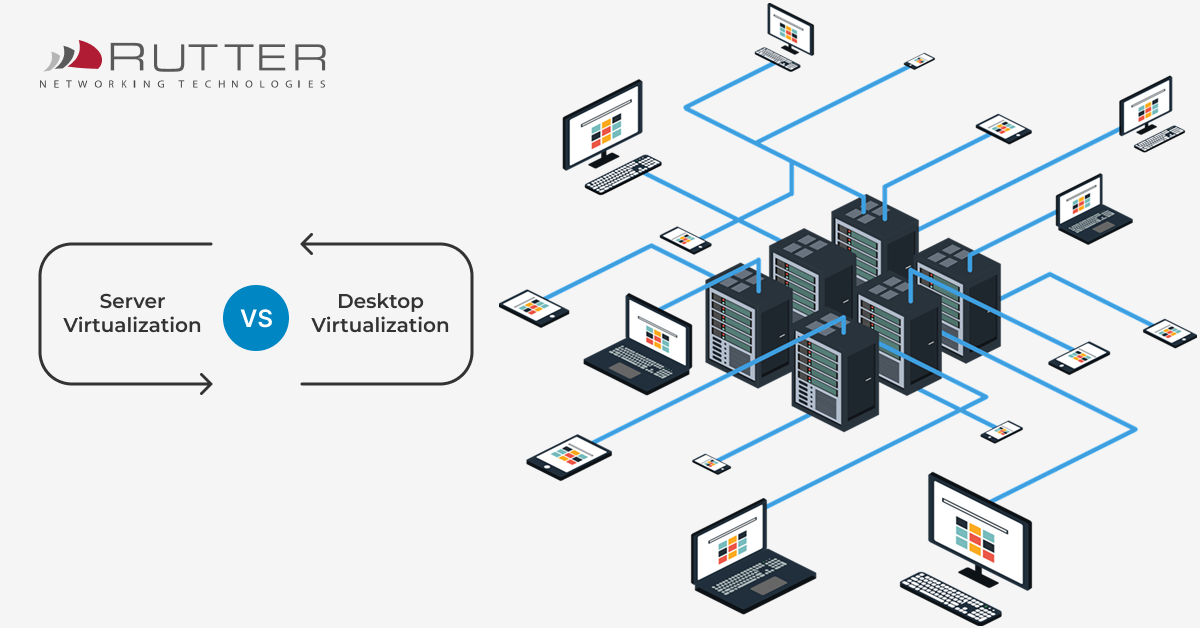
Server Virtualization vs. Desktop Virtualization: Which Fits Your Business?

Virtualization has transformed the way businesses manage their IT infrastructure. By creating virtual environments, companies can reduce costs, improve flexibility, and enhance data security. However, when it comes to choosing between server virtualization and desktop virtualization, many decision-makers struggle to find the right fit.

Read More

IT Health Check for Small Businesses in Boston — What’s Included and Why It Matters

If your network, software, or email systems haven’t been reviewed in over a year, your business might be sitting on hidden risks. Cybersecurity vulnerabilities, outdated systems, and inefficient processes can cost you money, productivity, and in the worst case your reputation.

Read More

Desktop Analytics: Modernizing Windows 10 Updates

What is Desktop Analytics?

Read More

Azure Cost Management: Orchestration Actions within Azure Budgets

Microsoft introduced Azure Budgets as a means to help companies plan for and drive organizational accountability. While many companies view budget enforcement from a traditional perspective such as alerts, currently Azure did not give you more direct options such as shutting down virtual machines (VMs). Using Budgets makes Azure cost management easy.

While these features are not out of the box, Azure Budgets does offer integration with Azure Action Groups. Action Groups provide a means to trigger an orchestrated set of actions resulting from a budget event. Such actions can be turning off machines when a threshold takes place (in this case when the budget is exceeded by a certain amount), for example. The action groups in term can then execute a PowerShell script (within an automation account) to perform the cost savings action.

It should be noted: this course of action does not need to be applied to all VMs. For example, the
shutdown sequence of VMs to keep within budget can be directed to machines:

Read More

Windows Autopilot: Modern Device Management for the Hybrid Workplace


What happened?

How did we get here? A littl e more than a year ago, and as a result of the COVID-19 pandemic, millions of people in the workforce were asked to start working from their home offices. Some went home with an assigned corporate laptop, but a lot went with whatever system could be found – lab machines, hastily repaired systems, and tech closet castoffs. Now, a lot of those users are continuing to work from home, even as companies start to reopen. This is part of a trend towards the hybrid workplace which was already under way pre-COVID but was accelerated by the pandemic. Windows Autopilot addresses this trend to make the process easier.

Read More

Storage Considerations for Windows Virtual Desktop FSLogix Profile Containers


One of the pillars of Windows Virtual Desktop (WVD) is the technology behind profile container technology, referred to as FSLogix. Upon login, the FSLogix profile container is connected to the computing environment so the profile is readily available.

This then raises the question on the ideal locations to host the repository of profiles generated FSLogix usage. Aspects to consider:

  • Space usage: FSLogix Profile Containers and Office Containers are dynamic files that will grow to a maximum default size of 30 GB.
  • IOPS operation per user session: The table below illustrates the projected IO footprint per user session.
Read More