
CMMC Readiness Process
CMMC readiness should not begin with panic, guesswork, or a last-minute evidence scramble. It should begin with a clear understanding of the environment.
Whether your organization is completing an applicable self-assessment, responding to contract or customer requirements, or preparing for future CMMC requirements, it needs to understand where FCI and CUI live, how access is controlled, which systems are in scope, how devices are managed, whether logs and backups are reliable, and whether evidence can be produced consistently.
Rutter helps organizations prepare the technical and operational foundation for CMMC readiness through a practical, infrastructure-first process.
July 2026 CMMC Phase II Update
The transition to CMMC Phase II is suspended while the program is under review. Phase I self-assessment requirements remain in place, and applicable procurements may continue to require CMMC Level 1 or Level 2 self-assessments.
Organizations should continue clarifying FCI and CUI scope, addressing technical gaps, maintaining documentation and POA&Ms, organizing evidence, and operating the security controls that support current contractual obligations and future CMMC requirements.
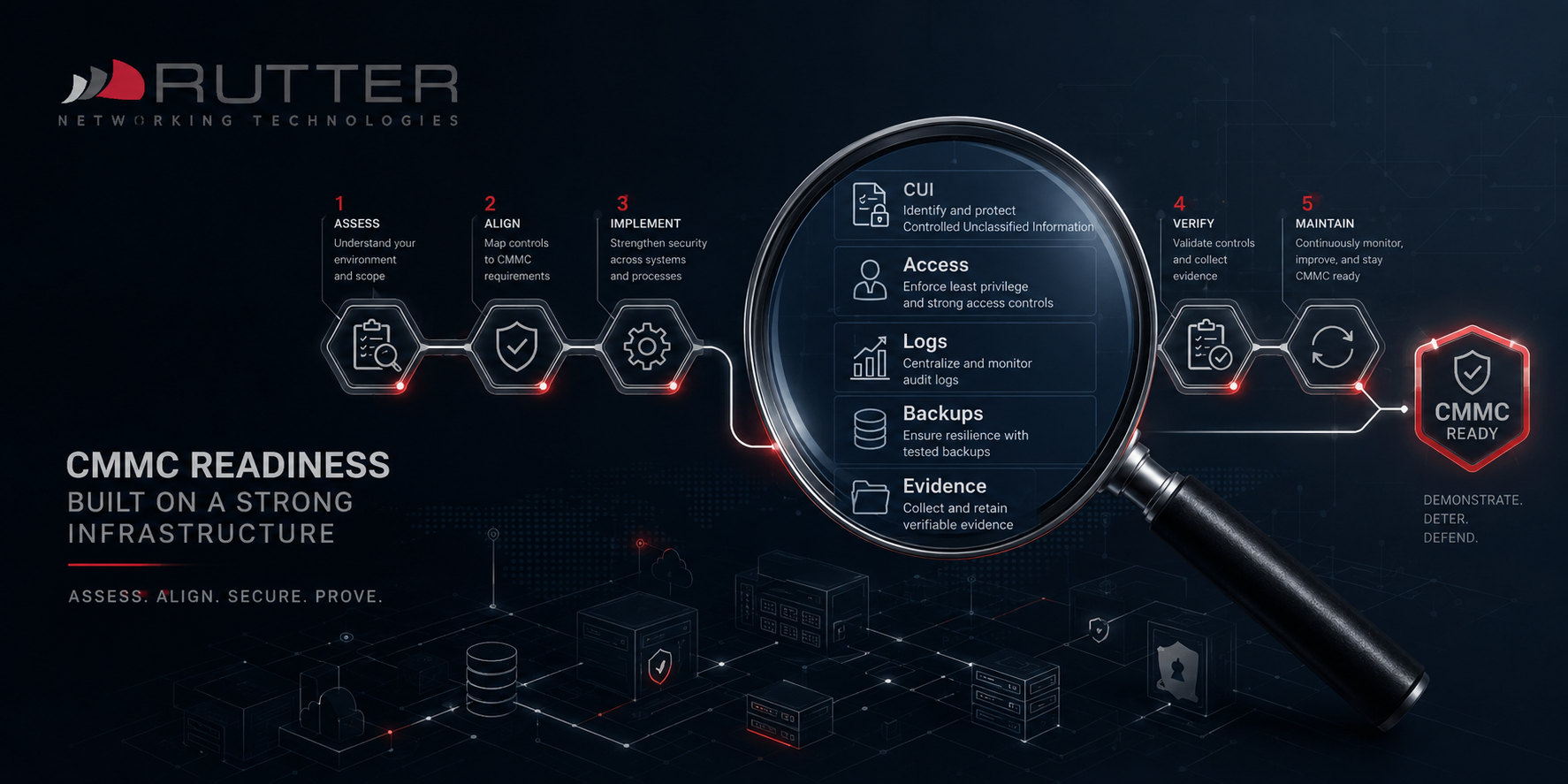
Use the links below to jump to each stage of the process. Start with the CUI boundary, then review the technical environment, prioritize gaps, build the roadmap, strengthen controls, organize evidence, and support ongoing readiness.
.jpg?width=4096&height=4096&name=shutterstock_2692075099%20(1).jpg)
An Infrastructure-First Path to CMMC Readiness
Rutter’s readiness process starts with the operating environment, not assumptions. The goal is to understand where sensitive information may live, which systems and users may be in scope, what technical controls already exist, and what evidence the environment can reliably produce.
Step 1: Define the FCI and CUI Scope
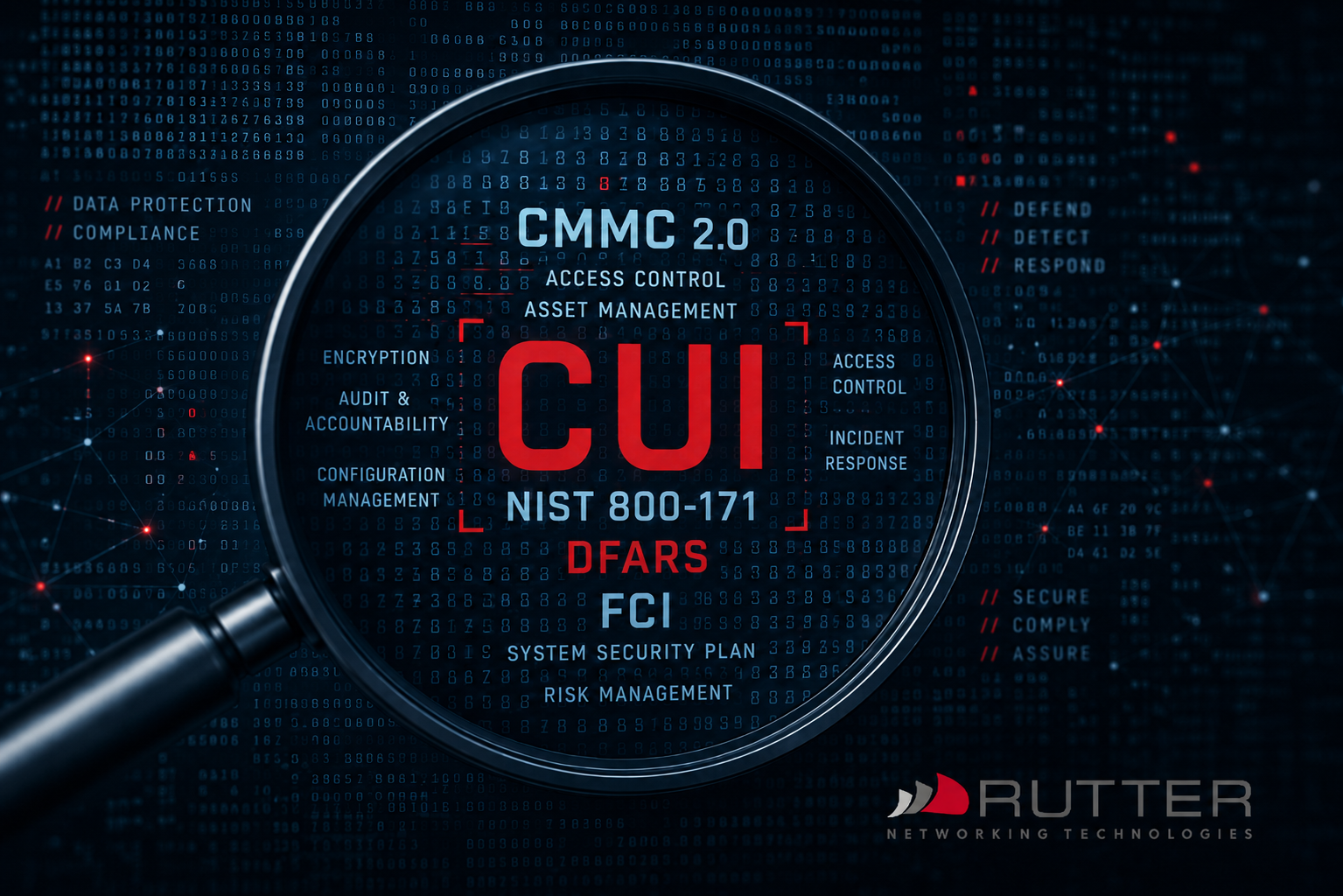
The readiness process starts with scope. Your organization needs to understand where FCI or CUI may enter the business, where the information is stored, how it moves, who can access it, and which systems support it. Without that clarity, the system boundary and readiness scope can become larger, more expensive, and harder to manage.
Rutter helps review potential FCI and CUI touchpoints, including:
- Email and Microsoft 365
- File storage and collaboration tools
- Engineering workstations
- Cloud environments
- Remote access systems
- Backup repositories
- Shared devices
- Vendor access
- Hybrid infrastructure
- Line-of-business systems
The goal is to support a more accurate, manageable readiness roadmap.
Step 2: Review the Technical Environment
Once the likely boundary is understood, the next step is to evaluate the systems and controls that support it.
- Identity and access control
- MFA and conditional access
- Privileged accounts
- Endpoint and device management
- Microsoft 365 and Azure governance
- Backup and recovery practices
- Logging and monitoring
- Firewall and network segmentation
- Remote access and VPN controls
- Patch and configuration management
- Evidence availability

This review helps determine whether the environment is operating in a way that can support CMMC readiness.
Step 3: Identify Gaps and Risk Priorities
Not every gap carries the same risk or urgency. Some issues create immediate exposure. Others create evidence problems. Some may affect user workflows, business continuity, self-assessment results, contractual obligations, or future assessment scope.

- Business risk
- FCI and CUI exposure
- Technical dependency
- Operational disruption
- Remediation effort
- Available internal resources
- Evidence impact
- Self-assessment, contractual, and future assessment impact
This allows leadership and IT teams to focus on the work that matters most first.
Step 4: Build the Remediation Roadmap
After gaps are identified, Rutter helps develop a practical remediation roadmap. The goal is not to create a long list of disconnected tasks. The goal is to sequence the work in a way that strengthens the environment without creating unnecessary disruption.
- Identity hardening
- Identity hardening
- Conditional Access improvements
- Administrative separation
- Intune deployment or cleanup
- Endpoint encryption and compliance policies
- Microsoft 365 security configuration
- Azure governance improvements
- Backup and recovery validation
- Logging and alerting improvements
- Network segmentation
- Evidence routine development
- Documentation support

The roadmap should connect technical changes to business outcomes, readiness goals, and operational risk.
Step 5: Implement Technical Controls
CMMC readiness depends on controls that actually operate inside the environment. Policies matter, but the technical implementation must support what the organization says it does.

- Microsoft Entra ID
- Microsoft Intune
- Microsoft 365
- Azure and hybrid environments
- Endpoint protection
- Backup and disaster recovery systems
- Monitoring and alerting tools
- Firewall and network infrastructure
- Administrative access workflows
- Remote access systems
The focus is on making security controls more consistent, visible, and manageable.
Step 6: Build Evidence Routines
Evidence readiness is where many organizations struggle.
A control that exists but cannot be proven creates friction during applicable self-assessments, customer reviews, readiness discussions, government reviews, and future formal assessment preparation.
- Monthly access reviews
- Device compliance reports
- Patch and configuration exports
- Backup validation records
- Monitoring and alert summaries
- Incident response documentation
- Change records
- User onboarding and offboarding records
- Administrative access reviews
- SSP-supporting technical narratives
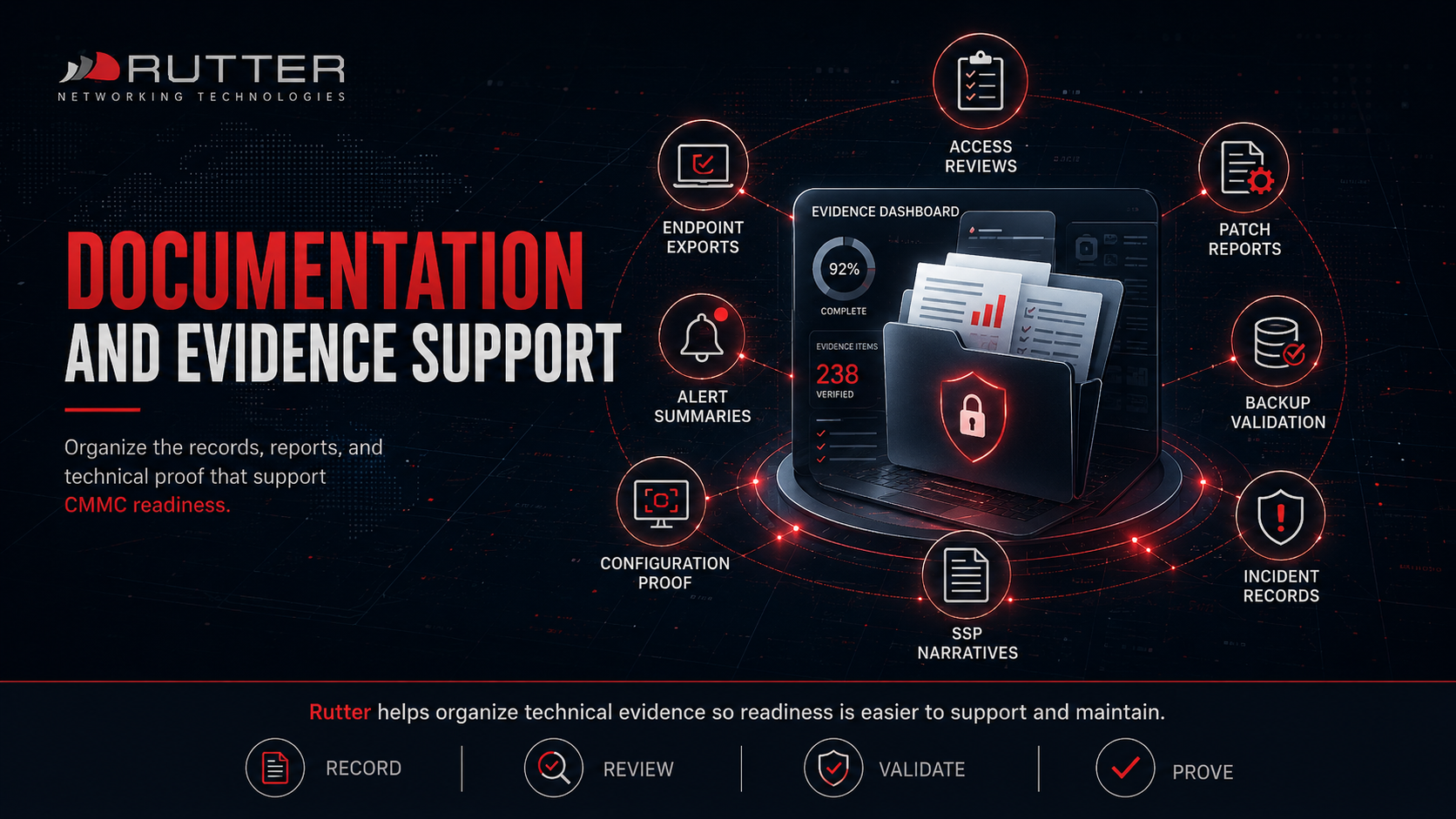
The goal is to move away from last-minute screenshots and toward consistent evidence habits.
Step 7: Support Ongoing Readiness
CMMC readiness is not a one-time project. Users change. Devices change. Contracts change. Cloud environments change. Vendors change. Systems drift.
Rutter can support ongoing managed IT, security maintenance, monitoring, backup validation, endpoint management, and evidence routines so controls continue operating after the initial readiness push.

- Managed IT and cloud operations
- Security monitoring
- Endpoint management
- Identity and access reviews
- Backup and recovery testing
- Microsoft 365 and Azure administration
- Evidence collection support
- Technical remediation
- Customer questionnaire support
- Readiness check-ins
The goal is to keep CMMC readiness from becoming a one-time cleanup effort by making security, monitoring, recovery, endpoint management, and evidence support part of normal IT operations.
Readiness Support, Not Certification
Rutter’s Role in CMMC Readiness
Rutter does not certify organizations for CMMC and does not replace the role of a C3PAO.
Rutter supports the technical readiness work associated with current self-assessments, contract and customer requirements, and future formal assessment activity. That includes infrastructure review, technical remediation, Microsoft security configuration, evidence support, backup and recovery review, endpoint management, and ongoing managed operations.
Formal assessment and certification, when required, must be handled through the appropriate authorized CMMC assessment process.
CMMC Readiness Process
An Infrastructure-First Path to CMMC Readiness
Rutter’s readiness process starts with the operating environment, not assumptions. The goal is to understand where sensitive information may live, which systems and users may be in scope, what technical controls already exist, and what evidence the environment can reliably produce.
Use the current review period to understand what your environment can prove today and what should be improved before contract, customer, self-assessment, or future CMMC requirements create urgency.
